I’ve just completed a Marie Skłodowska-Curie Staff Exchanges secondment at ZRC-SAZU (Ljubljana, Slovenia) within the EU PopMed-SusDev project. The stay was a chance to sit with colleagues across anthropology, sociology and media studies and pressure-test our questions about youth, public space and the “digital everyday.”
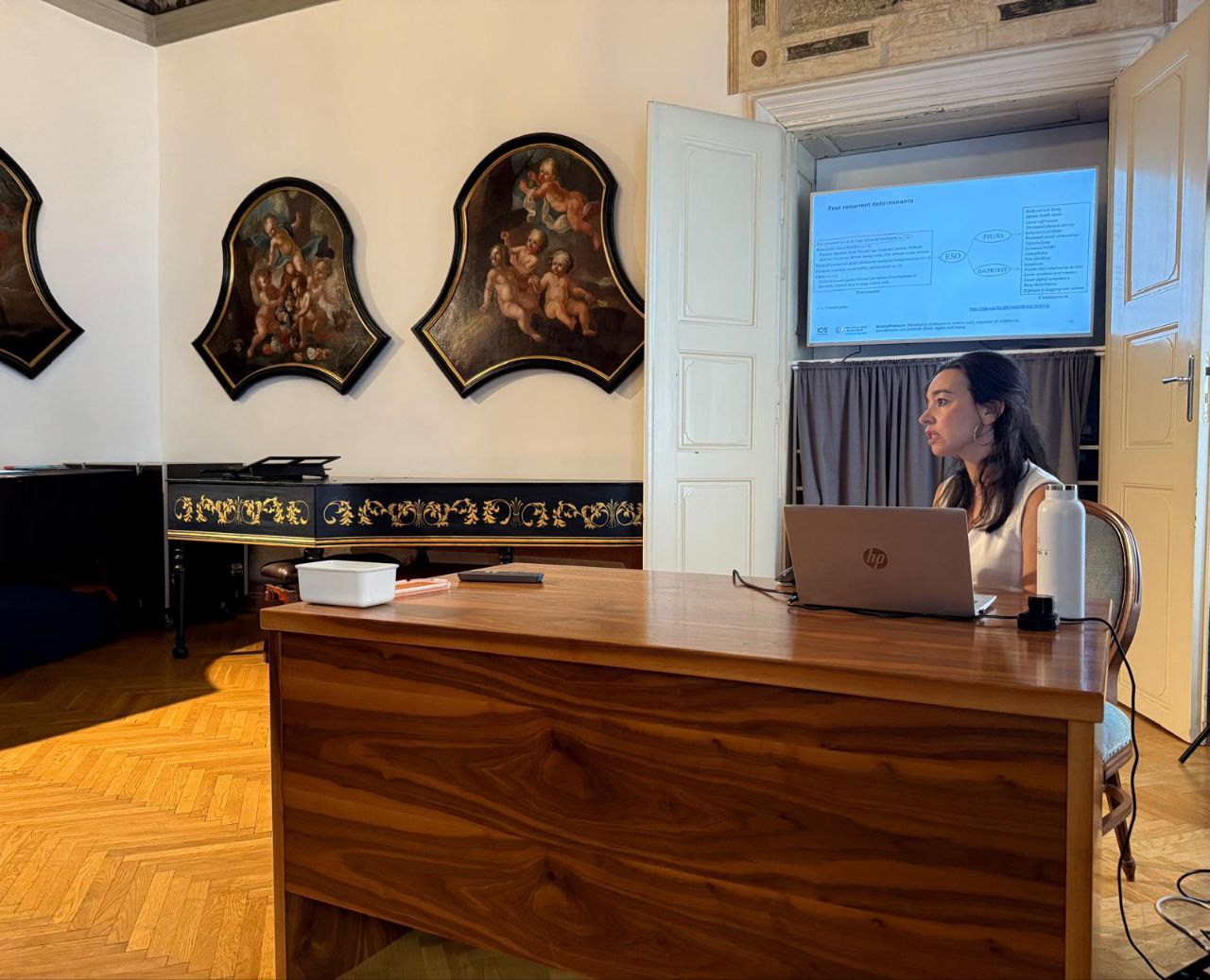
Mid-month I gave an open lecture at ZRC-SAZU on youth, public space and smartphone cultures; the debate travelled beyond the room, with follow-ups on N1 TV and the RTV SLO radio interviews that kept the conversation going with teachers, parents and students.
A big part of the month was simply listening—how Slovenian researchers and practitioners are framing the same tensions we see in Barcelona. The local picture is moving fast. In early 2025, a civil initiative called Odklopi (odklopi.net) launched a petition urging legal limits on private smartphones and other digital devices in schools, sparking a national conversation and significant media attention. The petition closed with around 14,500 signatures, after which the Ministry of Education announced a public consultation and tabled a package of proposals that includes statutory limits on device use in school, guidance on enforcement, and educational measures on healthy digital habits.
Before this push, rules were set school-by-school in Slovenia—some schools tightened use during lessons, others across the school day, and very few adopted blanket bans—so Odklopi functioned as a coordinating signal that brought dispersed practices into a national debate. That broader context matters: across Europe, several countries have moved from local rules to national restrictions during the school day, and Slovenia’s consultation sits squarely in that trend.
Why is this relevant for MobilePressure’s agenda? Three reasons emerged repeatedly in Ljubljana.
First, public space is changing—pedestrianisation, tourism flows and summer heat reshape when and where young people meet; phones are the glue for coordination.
Second, digital sociality is infrastructure: expectations to be reachable organise daily time and visibility, which matters for school life and for precarious work schedules.
Third, civic initiatives (in Slovenia and Spain alike) are reframing the conversation away from individual blame and towards collective norms and clear, enforceable school rules that parents and teachers can actually work with. The Odklopi campaign, the Ministry’s response, and the lively media discussion around my lecture made those connections tangible.
I return with a tighter survey instrument, a clearer way to write about phones as everyday infrastructure (not just a distraction), and practical ideas for comparative, small-N qualitative work across cities.
Many thanks to colleagues at ZRC-SAZU and the University of Ljubljana for the warm welcome, questions and reading suggestions—and to local journalists for helping take the debate outside the seminar room. If you’re working on youth, public space or digital cultures and would like to compare notes, get in touch.
Cristina Montañola